Showing posts with label breathing. Show all posts

Friday, February 5, 2010

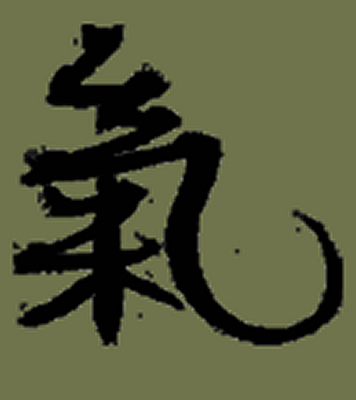
Breath, Chi, Prana, Ki, Core, STRENGTH


One of the first things I ever learned in martial arts training was how to breathe. One of the most advanced, yet crucial concepts of core strength is breath.
One of the first things that I struggled painfully with in my youth was breathing.

During my Australian 2-Day workshop in Adelaide, one of the first strength concepts I covered was breath - specifically diaphragmatic breathing. We didn't talk about RKC-style power breathing or anything specifically related to martial arts. We talked about health & functionality.

Babies & little kids, when you watch them breathe, especially during sleep, breathe from their abdomens. This is called abdomenal or diaphragmatic breathing, as it uses the uppermost muscle of the core, the diaphragm, for powering the respiratory process.

Adults, by contrast, have learned to breathe from their necks, using their scalenes and intercostal muscles to power their breath. This is called apical breathing, as the center of the movement is no longer in the lower abdomen, but rather in the apex of the torso. Apical breathing patterns DO present in children, but usually in those who are asthmatic.

How do I know about this?

As I mentioned above, one of the things that I struggled painfully with as a child was asthma. My lungs were horrible. Between repeated bouts of pneumonia, allergies, sinus infections, and asthma attacks, it's a wonder I made it to high school. As I told one of my Twitter followers, I had asthma attacks so severe once that I had to kick the wall to wake my parents up because I couldn't draw the breath to cry or scream.

Now if you've ever been under water a bit too long, you know what it's like to not be able to inhale and slightly suffocated. Unless you're into the uber-kinky, that sort of thing is no fun at all and leads to a panic reaction. Over time, the simple experience of being short of breath often trains asthmatics to lunge for their inhalers to provide a bit of relief for those bronchial spasms and allow a deep inhalation.

However, using diaphragmatic breath training gleaned from my father's Tai-Chi lessons, my lungs were able to reverse the process of asthmatic inhaler dependence. Those same lessons would reappear in different forms throughout the years. In college, while training with Fukienese Shaolin master, Andy Hong, he spoke of the the way college kids breathe so shallowly and how unhealthy he thought it was. During that same period, Shotokan karate's first master to set up shop on American soil, Tsutomu Ohshima, said that the hara or tanden is the true center of ki and that breathing is less of a lung/chest thing as it is a belly-centered process.

Over a decade later, I heard a former Soviet Special Operations PT instructor named Pavel Tsatsouline say a very similar thing in the context of strength training and kettlebell lifting. And within a few years of meeting, training with, and certifying under Tsatsouline as one of his RKC instructors, a self-described "Redneck" of peculiar genius in the fields of human performance & physical theraphy named Gray Cook would also speak in great detail about how diaphragmatic breathing is one of the most crucial keys to understanding how the core fires and how movement becomes both powerful and natural.

In an asthmatic attack, all of that becomes halted. As Gray Cook is renowned for saying, "The neck becomes your core", and the muscles around your neck become far more tonic than they should be in comparison to the muscles of your midsection.

So do all asthma attacks require the immediate intervention of an inhaler to block the pathological cascade effect of bronchospasm, panic, sympathetic nervous system dominance, and greater bronchospasm?

NO.


How can you tell?

Easy... If you're asthmatic, try this. You have to teach yourself to breathe through the following process and eventually apply it successfully under duress (meaning, during an asthma attack).

Learn to breathe from your lower abdomen, and yes, there are steps for this process too. One of the simplest, I've found, is to start from lying down in the supine (face-up) position.
a. Place your fingertips a couple of inches below your belly button.
b. Make sure you drop your head, neck, shoulders, back, hips, and legs down into the floor as if they were melted onto it. Try to keep your body as loose and unwound as possible, short of having an accident. This gives the spine a position of passive axial extension (or as some would refer to it, neutral).
c. Re-focus your attention onto your fingertips.
d. Let your breathing become slow, even, and deep.
e. As your breathing deepens, try to initiate your inhalation by pushing out against your fingertips. What normally happens is that people breathe with their chests heaving, and then the abdomen inflates only secondarily, if at all. We're trying to get the abdomen to inflate FIRST, leaving the chest relaxed and heavy throughout the inhalation process.
f. To exhale, just let the breath fall out of you naturally.

Now if you can do this while lying down, then repeat the process from prone (face-down, a.k.a., Crocodile Breath, as taught in Secrets of the Shoulder), then seated, then standing, then walking.

Once you can do it while walking, you might be surprised how consciously applying the diaphragmatic "belly-oriented" breathing can actually arrest an asthma attack, decreasing reliance on inhalers and improving posture, sports performance, and quality of life. This method has proven its worth more than once, and I encourage you to try it (with your doctor's approval) if you or someone you love is asthmatic.

Make sure to go SLOWLY through each step outlined above, and keep the inhaler nearby if you can't control the sense of suffocation. Keep the neck muscles nice & relaxed, keep the spine long and tall, and keep the breath sinking down into your lower abdomen. I did this with an asthmatic friend in Australia, and he was able to finish a martial arts class without having to take a puff.

While it's easy to take breathing for granted and blow it off (no pun intended) as a natural & vital body process that "everyone knows", it's still a process that our neuromuscular system can have bugs in. Once in a while, we need to scan/test the software for those bugs, and upload newer, cleaner software to the system. That keeps our bodies running optimally and us breathing easy.

As always, let me know how this goes for you!

Friday, June 20, 2008

And for this weekend...

Man, I can't believe it... About to get on another plane. Luckily, this is just a short trip.

As I was writing a note for my KettlebellsLosAngeles Newsletter, I liked the content so much that I figured it might be beneficial if I posted the message here too.

Enjoy, Folks!
-------------
Hello, Kettlebellers!

One of these days, I'll be able to follow my own advice and PROPERLY moderate my workload, but right now, it's just moving at the speed of absolute insanity. I'll be heading out of town this Sunday morning, but there will still be plenty of KBLA's RKC-certified instructors and instructor candidates on hand to teach in my absence. My wife, Dr. Courtney Cheng, RKC II, may be under the weather, so don't expect her to be on hand.

For this week's training, there are 2 things I want people to work on:

1. Maximum Volitional Contraction (MVC), and

2. Efficient Explosiveness (EE).

Through my training with Pavel Tsatsouline and my conversations with Gray Cook, both mentors of mine, I've realized that more often than not, people think they're contracting a muscle to its maximum (i.e., generating an MVC) when they're really not.

How does this happen?..... Simple... we lose touch with our bodies and develop really awful habits of motion and of stability. Some people refer to this as having poor ergonomics, but it's also an issue of having rotten movement patterns.

What's the first, most vital movement pattern that people tend to unlearn?.... BREATH!

Why is breath crucial?..... Aside from the obvious issues of asphyxiation, how we breathe is one of the most fundamental factors deciding whether we're in an efficient and powerful state (parasympathetic nervous system dominant - i.e., calm & in control) or a highly inefficient and weak state (sympathetic nervous system dominant - i.e., fearful, panicked, defensive, & in denial).

When I was discussing this with Gray Cook this past weekend, I almost thought that I was sitting in a psychology class, but these are all the SAME messages that we hear in Traditional Chinese Martial Arts training, starting with Chi Kung (aka. qigong). We try to shift our breathing down to the lower abdomen to train diaphragmatic breating, instead of breathing in our upper chests. As Brett Jones, MRKC, said in Secrets of the Shoulder, the lungs expand downward because of our diaphragms, and that's 2/3 of our lung volume!! But in many cases, we've unlearned how to breath properly. Want proof? Watch a baby breathe. The belly rises and falls, not the upper chest.

And how does that tie into Russian Kettlebell training?..... The sharp and short "sssst!" sound you make on exhalation while doing KB ballistics is a rapid intraabdomenal compression, coming from your lower abdomen. If you try it from your chest, it's weak. Not as many stabilizing muscles fire. Now try it exhaling sharply, almost from your groin. Feel how different it is in terms of the power you generate???

So this is how class is going to run this weekend as far as a rough schedule:

- 10 minutes of joint mobility (basic warmup)

- at least 5 minutes of VERY focused lower abdomenal breathing:

*Start with your feet shoulder width and parallel, relax your legs, reach up to the sky with the vertex of your head, and overlay one palm on your sternum and the other palm just under your belly button. Now breathe slowly, evenly, and deeply.
*You should feel the palm on your lower abdomen push outward against your hand as you inhale, and fall back in towards your spine as you exhale. The hand on your sternum should ideally not even move.

- Divide the class up into beginners, semi-experienced, and RKC candidates

- One of the RKCs takes the beginners & semi-experienced through the Hard Style Lock, wall squat, KB deadlift, KB swing, and Naked Get-Up. Remember that for a first-timer, less is more. The Hard Style Lock is a crucial skill where you get your first exposure to MVC. If you "think" you're clenching your glutes or "think" you're locking your knees, the odds are pretty damn good that you COULD and SHOULD engage them even MORE forcefully. We live in a "good enough" society, but you need to remember that "good enough" means "first idiot injured from carelessness" in Chinese.

You want to be able to pull off the ENTIRE 5 point Hard Style Lock with real synchronicity and your real Maximum Volitional Contraction, and the KBLA instructional crew will show you how. As Pavel always says, "Tension equals strength." So learn WELL how to generate tension right from the get-go..... A leakage in tension is a liability in structure!

NOTE: For the instructional crew, if you see someone zoning out or ignoring your instructions, don't let them touch a kettlebell. Have them do bodyweight exercises until they learn how to move properly. Moving improperly with a kettlebell is just a means of reinforcing compensation mechanisms, and as the saying goes, "nothing good can come of it."

- RKC Candidates: Instead of doing the Hard Style Lock and all of that, grab a relatively heavy bell and do 5 - 10 swings with 2 hands, and then 5 swings per hand of 1 handed swings. You're trying to achieve 2 things: a) maximum explosiveness from the legs and glutes, and b) note the feeling of smoothness at the bottom of the arc with the 1-handed swing.

Once you've done that, go through your snatch test with the strict RKC rules. I want to see numbers posted on my blog under the corresponding post. Coach each other as you go through it, forcing each other to adhere to maximally correct form.

THIS RKC SNATCH TEST is your lesson in Efficient Explosiveness. What are the salient points of EE?
*Sensing exactly how much muscular force/explosiveness to use to get the KB to float up to the apex
*Guiding the arc of the KB more vertically than diagonally. If the KB bounces on your wrist, it's usually because you're either overthrowing the bell or you're finishing the snatch with the apex in front of you. Adjust accordingly.
*Sense the smoothness at the bottom of the arc. Lowering the KB from the apex doesn't mean "turn your brain off". Rather, you should be just as mentally engaged and aware of the feel of the bell while you're lowering it as you were while you were snatching it upward. If it feels like there's any jerkiness or strain, you need to adjust your form.

You are each allowed only ONE attempt on Sunday. Rest well on Saturday and bring your A game!

Once you've gone through your snatch tests, rejoin the class and spread the lovin'.

This weekend's circuit will be designed by KBLA's own Dr. Jeff McCombs, DC, RKC, if he's present. Doc Jeff is highly competent in both putting a hurt on you and taking the hurt off of you!

Train hard, train smart, train kettlebells!

"Doc" Mark Cheng, RKC Team Leader